mirror of
https://github.com/amir20/dozzle.git
synced 2025-12-31 10:07:22 +01:00

144 lines
5.9 KiB
Markdown
144 lines
5.9 KiB
Markdown
[](https://goreportcard.com/report/github.com/amir20/dozzle)
|
||
[](https://hub.docker.com/r/amir20/dozzle/)
|
||
[](https://hub.docker.com/r/amir20/dozzle/)
|
||
[](https://hub.docker.com/r/amir20/dozzle/)
|
||

|
||
|
||
# Dozzle - [dozzle.dev](https://dozzle.dev/)
|
||
|
||
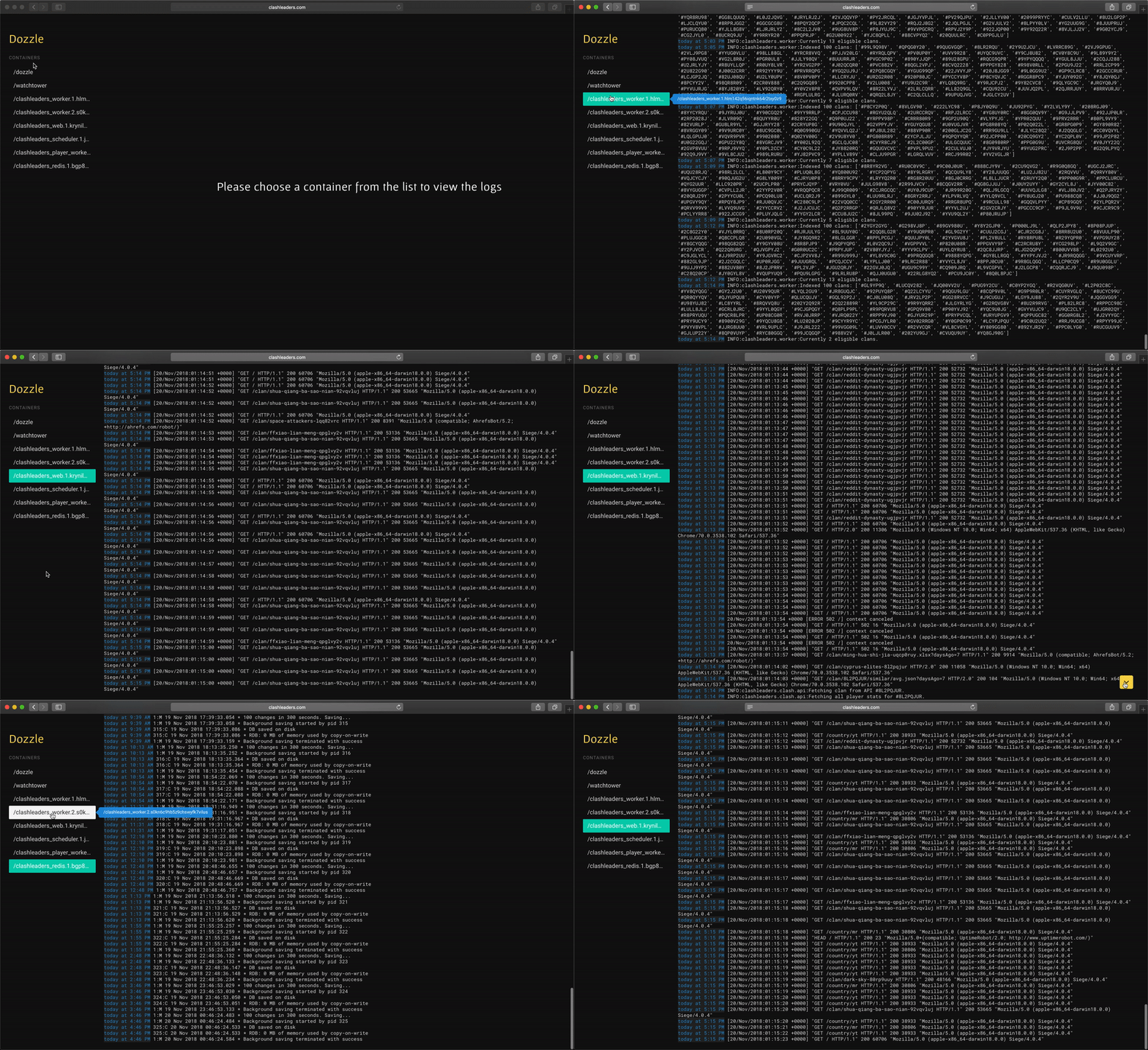
Dozzle is a simple, lightweight application that provides you with a web based interface to monitor your Docker container logs live. It doesn’t store log information, it is for live monitoring of your container logs only.
|
||
|
||
While dozzle should work for most, it is not meant to be a full logging solution. For enterprise applications, products like [Loggly](https://www.loggly.com), [Papertrail](https://papertrailapp.com) or [Kibana](https://www.elastic.co/products/kibana) are more suited.
|
||
|
||
Dozzle doesn't cost any money. Dozzle aims to stay simple, small and free.
|
||
|
||
|
||
|
||
## Getting dozzle
|
||
|
||
Dozzle is a very small Docker container (4 MB compressed). Pull the latest release from the index:
|
||
|
||
$ docker pull amir20/dozzle:latest
|
||
|
||
## Using dozzle
|
||
|
||
The simplest way to use dozzle is to run the docker container. Also, mount the Docker Unix socket with `--volume` to `/var/run/docker.sock`:
|
||
|
||
$ docker run --name dozzle -d --volume=/var/run/docker.sock:/var/run/docker.sock -p 8888:8080 amir20/dozzle:latest
|
||
|
||
dozzle will be available at [http://localhost:8888/](http://localhost:8888/). You can change `-p 8888:8080` to any port. For example, if you want to view dozzle over port 4040 then you would do `-p 4040:8080`.
|
||
|
||
### With Docker swarm
|
||
|
||
docker service create \
|
||
--name=dozzle \
|
||
--publish=8888:8080 \
|
||
--constraint=node.role==manager \
|
||
--mount=type=bind,src=/var/run/docker.sock,dst=/var/run/docker.sock \
|
||
amir20/dozzle:latest
|
||
|
||
### With Docker compose
|
||
|
||
version: "3"
|
||
services:
|
||
dozzle:
|
||
container_name: dozzle
|
||
image: amir20/dozzle:latest
|
||
volumes:
|
||
- /var/run/docker.sock:/var/run/docker.sock
|
||
ports:
|
||
- 9999:8080
|
||
|
||
#### Security
|
||
|
||
dozzle doesn't support authentication out of the box. You can control the device dozzle binds to by passing `--addr` parameter. For example,
|
||
|
||
$ docker run --volume=/var/run/docker.sock:/var/run/docker.sock -p 8888:1224 amir20/dozzle:latest --addr localhost:1224
|
||
|
||
will bind to `localhost` on port `1224`. You can then use a reverse proxy to control who can see dozzle.
|
||
|
||
If you wish to restrict the containers shown you can pass the `--filter` parameter. For example,
|
||
|
||
$ docker run --volume=/var/run/docker.sock:/var/run/docker.sock -p 8888:1224 amir20/dozzle:latest --filter name=foo
|
||
|
||
this would then only allow you to view containers with a name starting with "foo". You can use other filters like `status` as well, please check the official docker [command line docs](https://docs.docker.com/engine/reference/commandline/ps/#filtering) for available filters.
|
||
|
||
#### Changing base URL
|
||
|
||
dozzle by default mounts to "/". If you want to control the base path you can use the `--base` option. For example, if you want to mount at "/foobar",
|
||
then you can override by using `--base /foobar`. See env variables below for using `DOZZLE_BASE` to change this.
|
||
|
||
$ docker run --volume=/var/run/docker.sock:/var/run/docker.sock -p 8080:8080 amir20/dozzle:latest --base /foobar
|
||
|
||
dozzle will be available at [http://localhost:8080/foobar/](http://localhost:8080/foobar/).
|
||
|
||
#### Environment variables and configuration
|
||
|
||
Dozzle follows the [12-factor](https://12factor.net/) model. Configurations can use the CLI flags or enviroment variables. The table below outlines all supported options and their respective env vars.
|
||
|
||
| Flag | Env Variable | Default |
|
||
| ------------ | -------------------- | ------- |
|
||
| `--addr` | `DOZZLE_ADDR` | `:8080` |
|
||
| `--base` | `DOZZLE_BASE` | `/` |
|
||
| `--level` | `DOZZLE_LEVEL` | `info` |
|
||
| `--showAll` | `DOZZLE_SHOWALL` | `false` |
|
||
| n/a | `DOCKER_API_VERSION` | not set |
|
||
| `--tailSize` | `DOZZLE_TAILSIZE` | `300` |
|
||
| `--filter` | `DOZZLE_FILTER` | `""` |
|
||
|
||
## Troubleshooting
|
||
|
||
### Nginx Config
|
||
|
||
If you are using nginx as a reverse proxy, then you need to configure `/api` to enable server-sent events.
|
||
|
||
Below is an example configuration using SSL and `proxy_pass` with correct settings.
|
||
|
||
```
|
||
server {
|
||
listen 80;
|
||
server_name <example.com>;
|
||
return 301 https://<example.com>$request_uri;
|
||
}
|
||
|
||
server {
|
||
listen 443 ssl http2;
|
||
server_name <example.com>;
|
||
|
||
ssl_certificate </path/to/your/certificate>;
|
||
ssl_certificate_key </path/to/your/key>;
|
||
|
||
location / {
|
||
proxy_pass http://<dozzle.container.ip.address>:8080;
|
||
}
|
||
|
||
location /api {
|
||
proxy_pass http://<dozzle.container.ip.address>:8080;
|
||
|
||
proxy_http_version 1.1;
|
||
proxy_set_header Connection "";
|
||
proxy_buffering off;
|
||
proxy_cache off;
|
||
|
||
chunked_transfer_encoding off;
|
||
}
|
||
}
|
||
|
||
```
|
||
|
||
## License
|
||
|
||
[MIT](LICENSE)
|
||
|
||
## Building
|
||
|
||
To Build and test locally:
|
||
|
||
1. Install NodeJs.
|
||
2. Install Go.
|
||
3. Globally install [packr utility](https://github.com/gobuffalo/packr) with `go get -u github.com/gobuffalo/packr/packr` outside of dozzle directory.
|
||
4. Install [reflex](https://github.com/cespare/reflex) with `get -u github.com/cespare/reflex` outside of dozzle.
|
||
5. Install node modules with `npm install`.
|
||
6. Do `npm start`
|
||
|